
EUTH Wonders x Artsfourlove - Engaging the local community in connection through art ❤️🎨


This past weekend, the streets of Bonn became the setting for a innovative act of creativity, solidarity, and community-building as EUth Wonders, in collaboration with ArtsFourLove, organized a three-day graffiti workshop as part of the A Million Voices Project.

Over the course of three days, an underpass between Kaiserstraße and Königstraße in Bonn City was transformed into a vibrant collaborative mural space where artists, local residents, young people, community members, and participants from different cultural backgrounds came together to create artwork centered around peace, integration, resilience, and human connection.
The activity was rooted in one of the core values of the A Million Voices project: creating spaces where refugees and locals can share stories, express experiences, and build understanding through creativity.
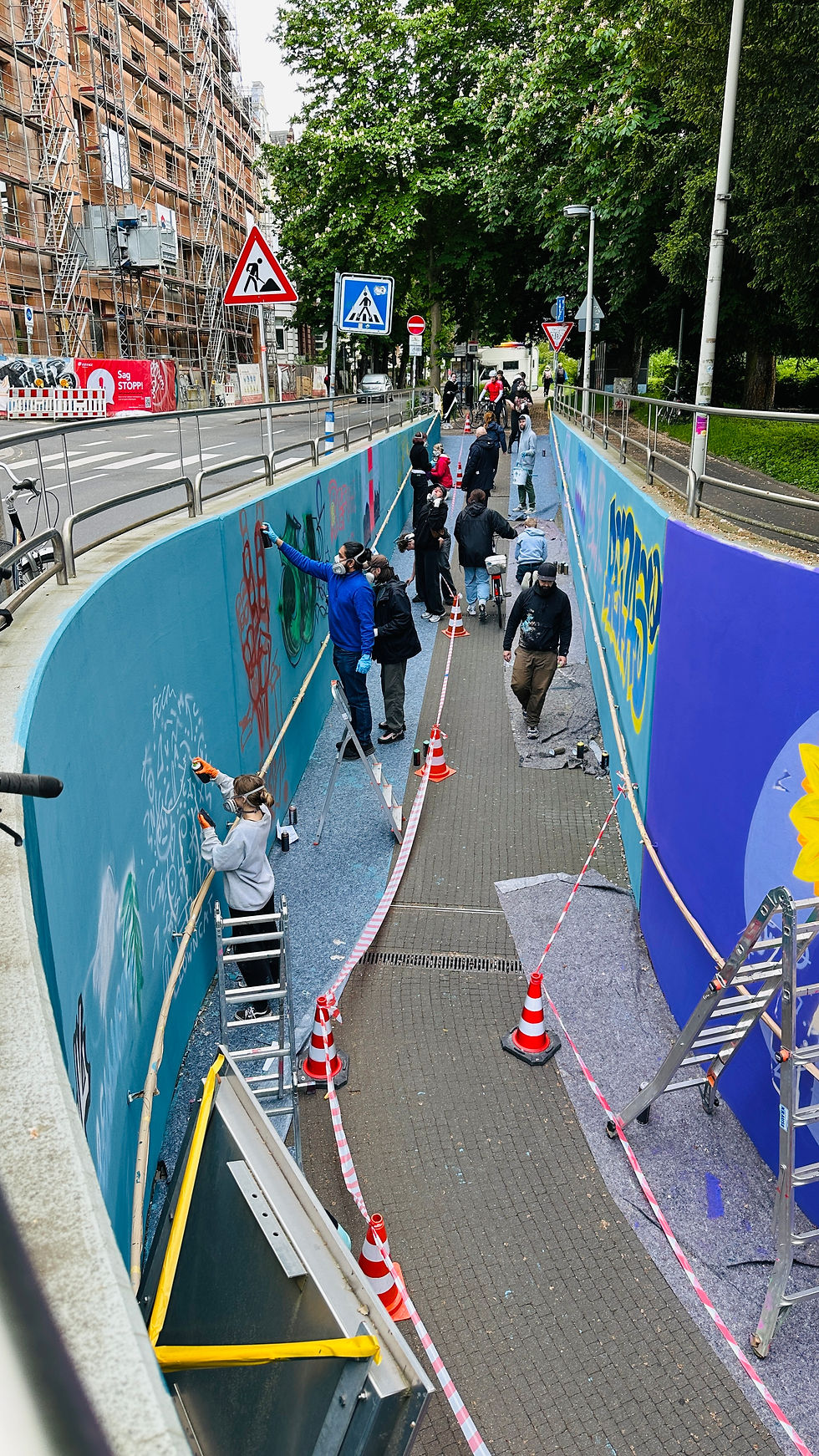
This workshop invited the public directly into the creative process. Participants became active contributors whose ideas, emotions, and perspectives helped shape the final artworks covering the walls.
Throughout the workshop, the underpass slowly transformed into a lively open-air creative hub. Spray cans rattled in the background as conversations emerged naturally between strangers. Some participants arrived already experienced in art and graffiti culture, while others had never held a spray can before. Yet the atmosphere quickly dissolved those distinctions. People exchanged ideas, experimented with sketches, helped each other with techniques, and reflected together on the themes of peace, connection, and integration guiding the workshop.

The central topics explored during the activity: peace, migration, inclusion, identity, and solidarity, carried particular weight within the context of the A Million Voices project, which focuses on supporting Ukrainian refugees and promoting social integration through art and storytelling. For many participants, these themes were real realities connected to personal experiences, emotions, and memories.
One of the strongest aspects of the workshop was its openness to community participation. Residents passing through the underpass stopped to ask questions, observe the painting process, and in many cases join in themselves. Over the three days, the space became increasingly alive with interaction and exchange.
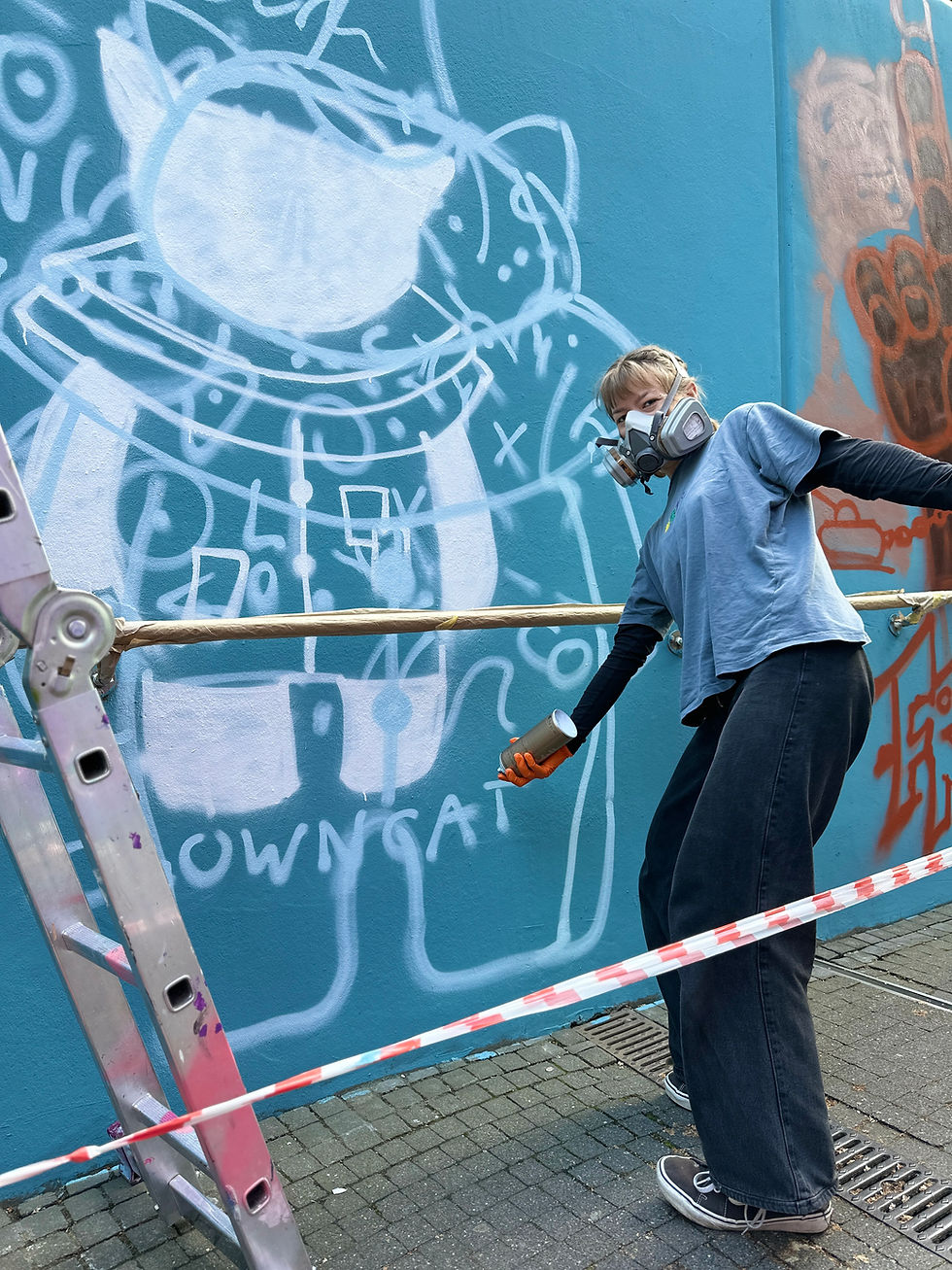
People of different ages and backgrounds contributed visual ideas ranging from symbolic imagery of peace and unity to more personal artistic expressions connected to belonging, displacement, hope, and cultural diversity.
The workshop also highlighted how public art can reclaim and reshape urban spaces. An underpass that many people would normally pass through without a second thought became a place of dialogue, creativity, and reflection. Through color, symbolism, and collaboration, the walls began telling stories that might otherwise remain invisible in everyday public life.
A Mural with Deeper Meaning

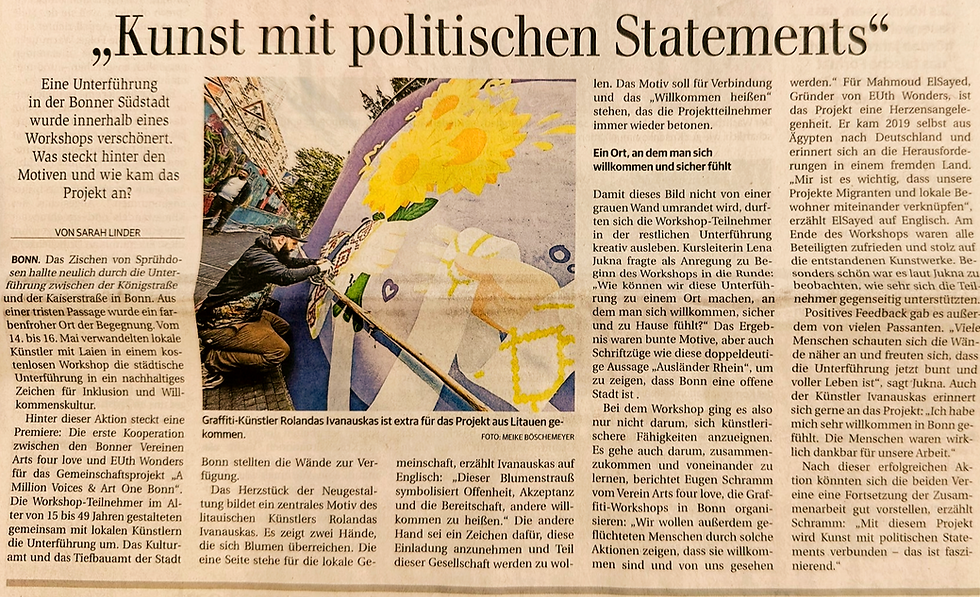
A particularly meaningful part of the activity was the involvement of Lithuanian street artist Rolandas Ivanauskas, who traveled to Bonn to collaborate on the creation of a large-scale mural representing solidarity with Ukraine and support for Ukrainian integration into German society.
For Rolandas, graffiti has long been a means of public expression and social commentary. His journey into street art began more than 18 years ago after seeing the graffiti-covered streets of New York on television, an experience that inspired him to explore how walls and public spaces could become platforms for important conversations.
Since then, his work has consistently focused on drawing attention to social issues and encouraging reflection through bold visual storytelling.
“I believe that anyone passing by my murals will feel supportive, uplifting thoughts about Ukraine. Graffiti is the perfect medium to talk about war because its very essence is to draw attention to problems and to protest publicly,” says the artist.
What made the collaboration especially impactful was the fact that the mural itself emerged through collective creation. During dedicated mural design workshops, participants gathered to explore symbols, stories, and emotions connected to themes that are often difficult to express directly. Through discussions, brainstorming sessions, collaborative sketching, and reflection exercises, the first visual concepts gradually took shape.

These conversations became the foundation of the mural itself. Ideas from participants were woven into the final design, ensuring that the artwork represented not just one artist’s perspective, but a collective expression shaped by many voices and experiences.
The experience highlighted the emotional power of participatory art. For many participants, contributing to a public mural carried a sense of visibility and ownership. Seeing their ideas become part of a lasting artwork in the city created feelings of pride, belonging, and shared responsibility for the space around them.

At the same time, the activity opened conversations about the role of art within public life. Graffiti and street art are often associated solely with rebellion or aesthetics, but this workshop demonstrated their potential as tools for community engagement, storytelling, and social reflection. By placing these themes directly into public view, the project encouraged everyday passersby to pause, reflect, and engage with messages of solidarity and inclusion in a very immediate and accessible way.
The Bonn mural is also part of a larger international initiative taking place across three countries, where artists, organizations, and communities are working together to transform public spaces into reflections of human stories, resilience, and unity. Each mural developed within the project carries its own local identity while contributing to a broader collective message about dignity, integration, and hope in times of uncertainty.
Through this workshop, the A Million Voices project once again demonstrated the unique power of art to make people feel seen, heard, and connected, transforming public walls into platforms for empathy, resilience, and shared humanity.


Comments