
Hacktive Youth - Tunisia Mobility 🌴☀️
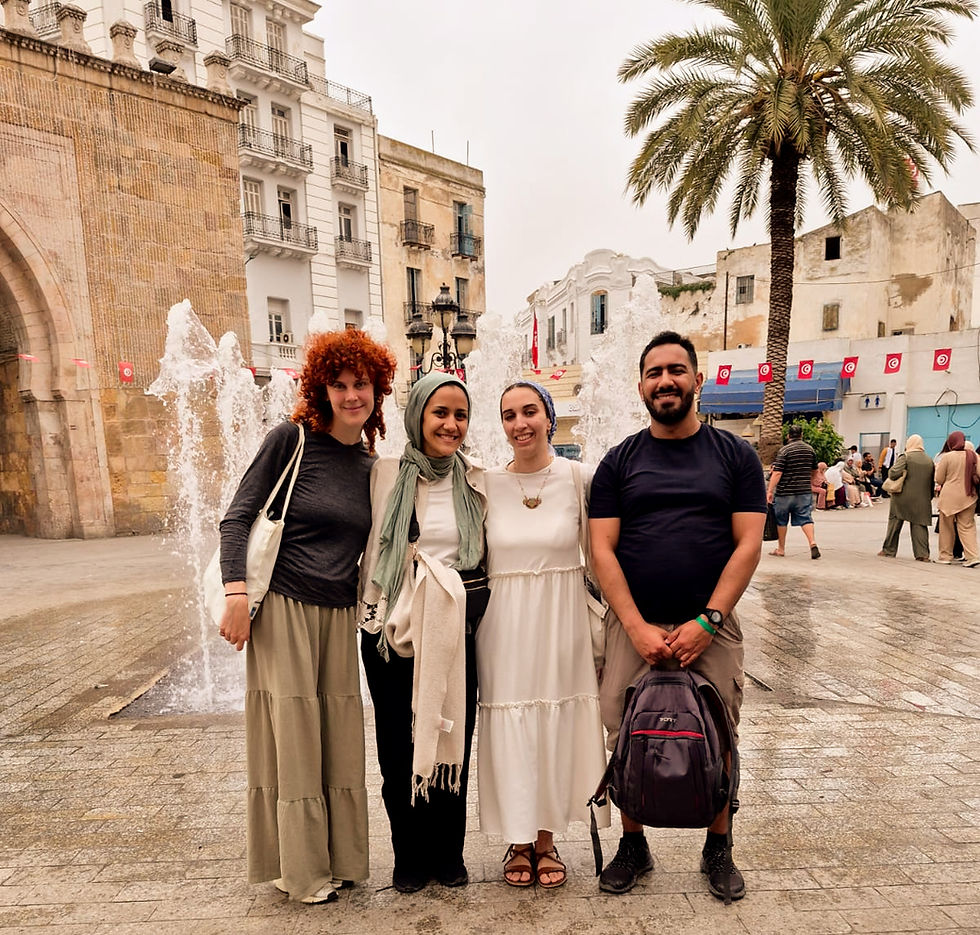
From 3–9 May 2026, the second mobility of the Hacktive Youth project took place in Hammamet, Tunisia, bringing together more than 30 participants from Morocco, Tunisia, Italy, Greece, Belgium, Germany, and Palestine for an intensive week of learning, exchange, and collaboration.
The mobility focused on equipping youth workers with the skills and tools needed to create and facilitate social hackathons for young people within their own communities.
Getting Started
Before the mobility began, participants were provided with the project’s methodological guide in order to familiarize themselves with the concepts and prepare for the upcoming activities and workshops.
The first day of the training focused on team-building, creating a safe and inclusive space, and collectively defining expectations and learning objectives. Through interactive activities, participants were encouraged to reflect on their own goals while building trust and connection within the group.
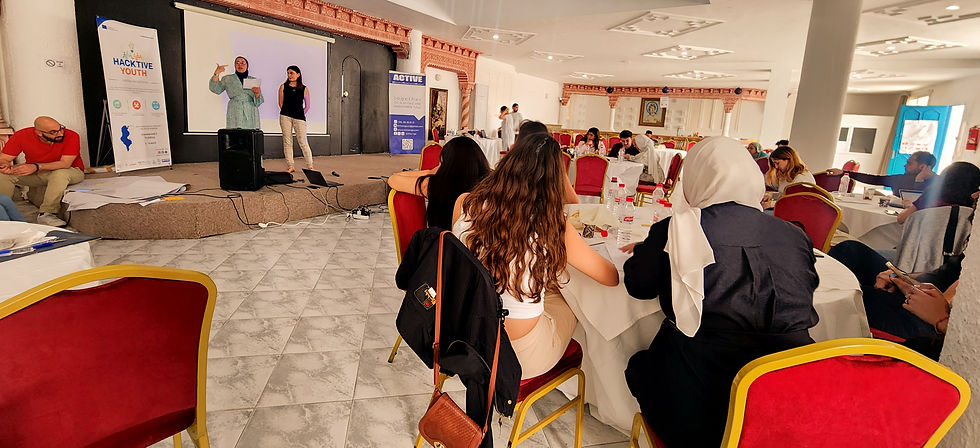
The training then moved into a deeper exploration of what a hackathon is, what makes a social hackathon unique, and how these approaches can be used to encourage active citizenship and community engagement among young people.
Participants were introduced to the seven key steps of preparing a social hackathon for youth, building on knowledge gained during the project’s online webinar phase. These steps included:
Education on active citizenship and rights
Context analysis and community mapping
Identification of social challenges
Designing community social hackathons
Implementation of community hackathons
Follow-up and implementation of solutions
Monitoring, reflection, and evaluation
One of the highlights of the second day was an inspiring session with representatives from France Volontaires, featuring guest speakers Cheikh Dialo and Aymen. Through an open and engaging discussion, the speakers shared their personal experiences and insights from working in the youth sector, offering valuable perspectives on impactful youth work, leadership, and community engagement. The session left participants feeling inspired and motivated, while also highlighting important considerations and responsibilities that come with working closely with young people.
On to the Workshops
Following the introduction of the seven steps, participants took part in a series of participatory workshops focused on each phase individually. The workshops used a variety of non-formal education methods including brainstorming sessions, group work, simulations, sketches, reflection exercises, and role-play activities.

Facilitators would first introduce a concept before dividing participants into smaller groups to develop practical tools and activities that could later be implemented with young people in their local contexts. Each group then presented their ideas, followed by open discussions and reflections where participants exchanged feedback and explored ways to make activities more inclusive and engaging.
Several sessions also included simulations where participants took on the role of young people themselves. This allowed youth workers to reflect on activities from both the facilitator and participant perspective, helping them better understand how to create safe, inclusive, and empowering learning environments.
Participants were also actively involved in the facilitation process itself, contributing to the preparation of activities and leading daily energizers and icebreakers throughout the mobility. This hands-on approach gave everyone the opportunity to strengthen their facilitation skills in a supportive and international setting.
Meaningful Opportunities
Beyond the educational activities, the mobility also created meaningful opportunities for intercultural exchange. During an immersive cultural night, participants shared elements of their cultures through food, music, traditions, and dance, while also learning traditional Tunisian dances and tasting international cuisines from the represented countries.

Participants were also able to experience Tunisian culture more deeply through a visit to the Medina of Tunis, followed by a shared local dinner together.
Final Reflections
As the mobility came to an end, the group gathered to review the different stages of the social hackathon process and discuss concrete next steps for the project. Participants developed action plans for upcoming active citizenship workshops and local hackathons that will soon take place within their communities, as well as preparations for the international hackathon planned in Egypt.
The final reflections also focused on identifying possible challenges youth workers may face while implementing activities locally, and collectively discussing strategies to overcome them while ensuring young people remain actively involved and empowered throughout the process.
Overall, the mobility in Tunisia was an incredibly enriching experience that strengthened participants’ facilitation skills and deepened their understanding of how to involve, include, and empower young people as active citizens. Beyond the educational outcomes, the project also created strong personal connections and lifelong friendships between youth workers who had previously only met online during the webinar phase of the project.


Comments